
Why Termite Tenting is Sometimes Necessary
Termites can remain hidden inside structural wood for months or years before damage appears. By the time discarded wings, drywood termite pellets, hollow-sounding wood, or weakened framing become noticeable, activity may already extend through several parts of a building.
Not every infestation requires termite tenting. Localized foam, soil, or borate treatments may be effective in suitable situations. However, widespread drywood termite activity in multiple inaccessible areas can make whole-structure fumigation the more comprehensive option.
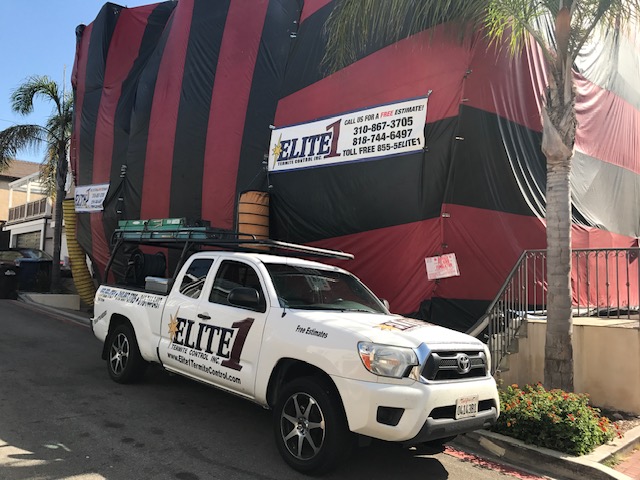
When Localized Treatments May Not Reach Every Colony
Drywood termites live entirely within wood and do not need contact with soil. Their colonies can occupy roof framing, wall studs, flooring, window frames, attic timbers, and other wooden components without creating visible mud tubes.
Localized treatments can work well when activity is limited and the affected wood is accessible. The challenge begins when evidence appears in separate locations, or galleries extend into inaccessible spaces.
Signs that broader treatment may be considered include:
- Multiple areas showing pellets, discarded wings, or damaged wood.
- Repeated activity after previous spot treatments in different sections.
- Infestations extending into enclosed walls, ceilings, or roof framing.
- Evidence suggesting more than one drywood termite colony.
- Structural designs that prevent direct access to affected wood.
A detailed inspection helps determine whether targeted methods are sufficient or whether termite tenting offers more complete coverage.
Why Whole-Structure Fumigation Reaches Hidden Spaces
Termite tenting involves enclosing the entire structure beneath a specialized covering and introducing a fumigant that moves throughout the building. Unlike a surface application, the gas can penetrate enclosed spaces and reach drywood termites inside structural wood.
This matters because termite galleries may be hidden behind walls, beneath flooring, within attics, or inside decorative woodwork. Inspectors cannot always open structural components without causing unnecessary damage.
Different treatment methods serve different purposes. For example, this comparison of foam and soil treatments explains how foam applications target accessible termite activity while soil barriers are designed primarily for subterranean termites entering from the ground.
Termite tenting is considered when the infestation pattern calls for whole-structure treatment rather than isolated applications. The recommendation should follow a careful inspection, accurate termite identification, and an assessment of how extensively the activity has spread.
Conditions That Can Make Tenting the Better Option
Professionals evaluate several factors before recommending fumigation. The mere presence of termites does not automatically mean a property needs to be tented.
Important considerations include:
- Species identification because drywood and subterranean termites require different strategies.
- Infestation extent across separate rooms, levels, or structural sections.
- Accessibility of galleries hidden within walls, ceilings, roofs, or other enclosed areas.
- Previous treatment history and whether activity has continued in untreated locations.
- Building construction, attached features, and areas that are difficult to reach directly.
A small, accessible drywood termite colony may suit localized treatment, while widespread activity across inaccessible areas may make termite tenting the more thorough choice.
Professional evaluation reduces the risk of treating only visible evidence while leaving concealed colonies untouched.
Why Surface Sprays Cannot Solve a Hidden Infestation
Termites spend most of their lives out of sight. Drywood termites remain inside wood, while subterranean termites travel through soil and sheltered pathways. A visible insect or small damaged area may represent only one part of a much larger problem.
This is why simply applying a surface product where termites appear does not establish whether the colony has been reached. As explained in this guide to hidden termite activity, products applied to visible surfaces may fail to reach termites living deep inside walls, wood, or other protected spaces.
A professional treatment decision considers:
- Where termites are living, rather than only where signs are visible.
- How far the infestation may extend through structural components.
- Whether direct access to the affected wood is possible.
- Which treatment method matches the termite species involved?
- What follow-up inspection or prevention measures may be appropriate?
Effective termite control depends on reaching the actual infestation, which makes inspection and treatment selection closely connected.
What Homeowners Should Expect From the Tenting Process
When termite tenting is necessary, preparation and safety procedures are essential. Occupants, pets, plants, food items, medications, and other belongings may require specific handling before fumigation begins. Licensed professionals provide preparation instructions based on the property and applicable requirements.
The general process may include:
- Inspecting the structure and confirming that fumigation is appropriate.
- Providing clear preparation steps before occupants leave the property.
- Enclosing the building with a specialized tent or tarpaulin system.
- Introducing and monitoring the fumigant under controlled conditions.
- Aerating the structure and completing required clearance procedures before re-entry.
Termite tenting is not intended as a one-size-fits-all answer or a permanent guarantee against future infestations. Its value lies in treating widespread drywood termite activity throughout an enclosed structure at one time.
After treatment, long-term protection may include periodic inspections and prompt attention to new termite activity. A professional can also determine whether foam, soil, or borate treatments have a role in ongoing protection.
Give Hidden Termites Nowhere to Stay
When drywood termites have spread beyond the reach of localized treatment, a thorough inspection can determine whether whole-structure fumigation is justified. Contact Elite1 Termite Control, Inc. for professional guidance and a treatment plan suited to your property.