
Best Termite Treatment Options For Drywood Termites
Drywood termites present a unique challenge for homeowners. Unlike subterranean species that rely on soil contact, drywood termites live directly inside the wood they consume. They establish colonies within framing, attic beams, fascia boards, and other structural components, often without visible external signs. Because they do not require soil contact, infestations can remain hidden for years before noticeable damage appears.
From a professional standpoint, selecting the right termite treatment depends on early detection, accurate species identification, and a strategy tailored to the scope of infestation. Addressing drywood termites properly requires precision, experience, and a structured plan designed for long-term structural protection.
How Drywood Termites Differ From Other Species
Drywood termites behave differently from subterranean termites, and those differences directly influence treatment decisions.
- They live entirely inside dry wood without soil contact
- Colonies may exist in isolated pockets throughout a structure
- They produce pellet-shaped droppings known as frass
- They often infest attics, roof framing, trim, and furniture
- They may swarm indoors during warmer seasons
Because colonies are concealed within wood members, infestations often go unnoticed until visible signs appear. Small piles of frass beneath beams or window frames are common indicators. Hollow-sounding wood or blistered paint can also signal activity.
If you are unsure whether warning signs point to an active infestation, reviewing the signs of foam treatment can provide additional clarity about when professional intervention becomes necessary.
Localized Wood Treatments And Foam Applications
When drywood termite activity is limited to specific areas, localized termite treatment may be appropriate. This method focuses on directly targeting the affected wood without tenting the entire structure.
- Small access points are drilled into infested wood
- Specialized foam or termiticides are injected into internal galleries
- Expanding foam disperses through hidden voids
- Treated wood remains protected from reinfestation
Foam treatments are particularly effective because they expand within cavities, reaching areas that liquid surface sprays cannot penetrate. Proper placement is critical. Professionals evaluate structural layout and drilling patterns carefully to ensure galleries are fully treated.
Localized treatments work best when infestations are identified early and confined to defined sections. Missing secondary colonies may allow termites to persist elsewhere, which is why thorough inspection remains essential.
Whole Structure Fumigation For Widespread Activity
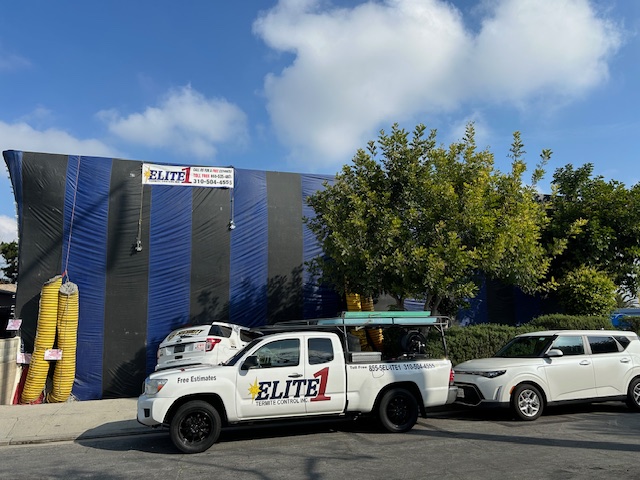
When drywood termites are dispersed throughout multiple areas of a home, whole structure fumigation may be recommended. This approach eliminates active colonies across the entire building simultaneously.
- The structure is enclosed and sealed
- A fumigant is introduced to penetrate all wood components
- Gas circulates into wall voids, attic framing, and inaccessible spaces
- Termites are eliminated at every life stage
Fumigation is often considered when infestations are extensive or when activity cannot be confidently isolated. While this method provides comprehensive elimination, it does not leave a long-lasting residual barrier. Preventive measures and ongoing monitoring are still important after treatment.
Professional evaluation determines whether fumigation is necessary based on infestation severity, structural design, and evidence collected during inspection.
Preventive Strategies And Soil Protection
Although drywood termites do not depend on soil contact, integrated termite management may include preventive soil strategies to guard against other termite species.
- Soil barriers can deter subterranean termite entry
- Structural gaps and cracks are sealed
- Moisture conditions are evaluated and corrected
- Routine inspections monitor for renewed activity
Understanding why soil treatment works helps clarify how layered protection strengthens overall structural defense. Even when drywood termites are the primary concern, preventive planning reduces the risk of future infestations from other termite species.
Professionals approach termite treatment as part of a broader structural protection strategy. Addressing vulnerabilities, correcting conducive conditions, and implementing targeted solutions ensure long-term stability.
In addition to termites, trained pest specialists may also manage related structural pests such as ants or other wood-destroying insects that contribute to property damage. Coordinated oversight ensures no overlapping concerns are overlooked.
Why Professional Evaluation Delivers Lasting Results
Drywood termite infestations are rarely straightforward. Colonies can exist in multiple isolated pockets, making accurate diagnosis the cornerstone of effective termite treatment.
A structured professional inspection includes:
- Identifying active versus inactive damage
- Determining colony distribution within the structure
- Distinguishing drywood activity from subterranean species
- Evaluating the need for localized or whole structure solutions
Improper treatment selection can allow termites to remain hidden behind finished surfaces. Surface applications rarely penetrate deeply enough to eliminate established galleries. Likewise, incomplete injection patterns may leave portions of the colony intact.
Professional termite treatment plans are tailored to the structure’s design, infestation scope, and wood composition. By combining precise treatment techniques with preventive strategies, long-term protection becomes achievable.
Drywood termites may take years to cause noticeable structural weakening, but early intervention limits repair costs and protects property value. Regular monitoring after treatment provides continued assurance that activity has been resolved and remains under control.
Safeguard Your Home With Expert Support
If you suspect drywood termites or have observed frass, damaged wood, or seasonal swarms, professional guidance can provide clarity and effective resolution. For experienced termite treatment solutions, contact Elite1 Termite Control, Inc.