
Termite Behavior Facts Every Homeowner Should Know
Termites are small insects, but their colonies operate as organized systems capable of feeding on a structure for months or years without drawing attention. Instead, they remain inside wood, soil, wall voids, attics, crawl spaces, and protected structural transitions.
Understanding termite behavior helps homeowners recognize why surface-level clues can be misleading. Drywood and subterranean termites differ, yet both depend on concealed activity. Effective termite prevention therefore combines professional inspection, accurate identification, property-specific treatment, and continued monitoring rather than waiting for visible damage.
Colony Roles Keep Termite Activity Organized
A termite colony contains distinct groups, or castes, that perform different jobs. Reproductives establish and expand the colony, workers gather food and maintain galleries, and soldiers help defend the group. The workers cause most structural feeding damage because they continuously collect cellulose and distribute it through the colony.
Important colony facts include:
- Workers remain hidden while feeding inside wood or protected routes
- Soldiers depend on workers for food and colony maintenance
- Queens can produce large numbers of eggs over long periods
- Swarmers leave mature colonies to establish new nesting sites
- Colony activity may continue after a few visible termites are removed
This division of labor explains why treating isolated insects does not address the source. The visible termites may represent only one small part of a much larger, concealed population.
Swarming Does Not Mean The Problem Just Began
Winged termites, called alates or swarmers, emerge when a mature colony is ready to reproduce. After flying, they shed their wings and pair off to begin new colonies. Homeowners may find wings near windows, doors, vents, or lights, but the event may be brief.
Swarming often indicates that an established colony is nearby rather than proving that termites arrived that day. The value of pre-sale prevention becomes especially clear when a property is being prepared for inspection or transfer. A professional evaluation can separate termite swarmers from flying ants and determine whether evidence points to indoor or exterior activity.
Termite wings are generally similar in length, while ant wings differ between the front and rear pairs. Accurate identification prevents the wrong treatment plan from being used.
Moisture And Wood Access Shape Where Termites Thrive
Subterranean termites live in soil and need moisture as they travel toward structural wood. Drywood termites live inside the wood they infest and can establish colonies in attics, eaves, furniture, framing, and other above-ground materials. Both types benefit from protected locations where activity can continue without disturbance.
Inspectors commonly evaluate:
- Irrigation that wets foundations, siding, or wooden posts
- Plumbing leaks, roof moisture, and damp crawl-space conditions
- Wood, mulch, or cellulose debris resting against soil
- Cracks, joints, utility openings, and concealed structural gaps
- Attic framing, eaves, trim, and exposed or weathered wood
Moisture correction supports termite prevention, but it does not eliminate an active colony. Inspection is still necessary to identify the termite type, determine where feeding is occurring, and select a suitable treatment method.
Hidden Feeding Makes Damage Difficult To Measure
Termites often consume wood internally while leaving a thin outer surface intact. A board may look normal until it is tapped, pressed, opened, or weakened enough to fail. Damage can extend through framing, trim, flooring, wall-side materials, or roof components before homeowners notice obvious changes.
Possible warning signs include mud tubes along slabs and foundations, pellet-like frass beneath suspected drywood termite activity, discarded wings, hollow-sounding wood, bubbling paint, uneven surfaces, and weakened trim.
Because visible damage may not show the infestation’s full boundaries, repairs should be coordinated with inspection and treatment. Removing evidence too early can make it harder to map active areas or distinguish old damage from current feeding.
Treatment Must Match How The Colony Is Distributed
Not every termite problem requires the same response. Localized activity may be addressed with precision injections, foam treatments, borate applications, or soil treatments, depending on the termite species and location. More extensive drywood termite infestations may spread through inaccessible sections of a structure.
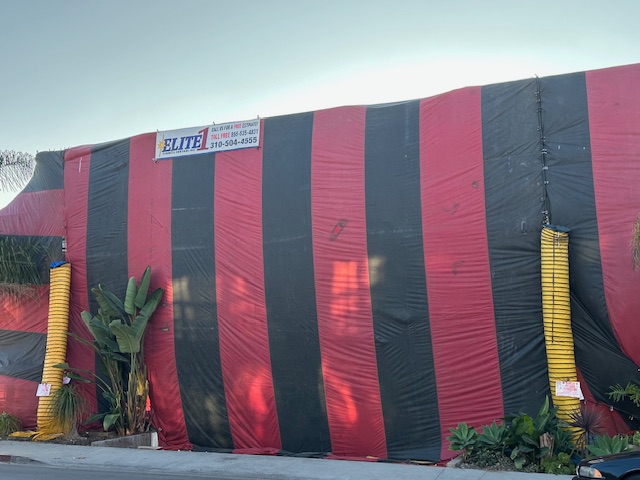
The need for whole-structure treatment arises when activity cannot be reliably isolated. Tenting and fumigation can address termites across a broader enclosed structure, while focused methods may be appropriate when evidence is limited and accessible.
A professional plan may involve:
- Inspecting interior and exterior areas for connected evidence
- Identifying drywood or subterranean termite behavior
- Mapping activity before choosing localized or full-structure treatment
- Applying soil, foam, borate, injection, or fumigation methods
- Scheduling annual reinspection or follow-up monitoring
Treatment should reflect colony distribution, construction, access, and risk.
Termite prevention works best when homeowners understand that colonies are organized, hidden, and adaptable. Swarmers may appear briefly, workers may feed continuously, and damage may remain concealed until repairs become significant. Professional inspections provide the clearest way to connect these behavioral facts with the actual structure and choose protection based on confirmed conditions.
Protect The Structure With Better Termite Insight
Contact Elite1 Termite Control, Inc. for professional inspections, property-specific termite prevention, targeted treatments, and long-term monitoring.